
#Project195 - OMAN
A country where former slaves are still alive

Sometimes, in Project195, I come across books that do more than offer intellectual pleasure or a new perspective on a country. They reveal problems I had never even been aware of.
This was one of those cases.
A novel about change
For Oman, I chose Celestial Bodies by Jokha Alharthi, first published in Arabic in 2010, and later in English in 2018. A year later, it became the first Arabic novel to win the International Booker Prize.
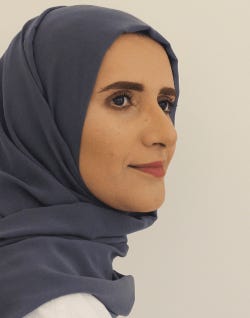
Alharthi, born in 1978, grew up in Oman and later in the United Kingdom, where she earned a PhD at the University of Edinburgh. Today, she is a professor in Muscat. She has written four novels, three of which have been translated into English, but it is Celestial Bodies that brought her international recognition.
A story without a plot
At first glance, Celestial Bodies does not seem like a plot-driven novel.
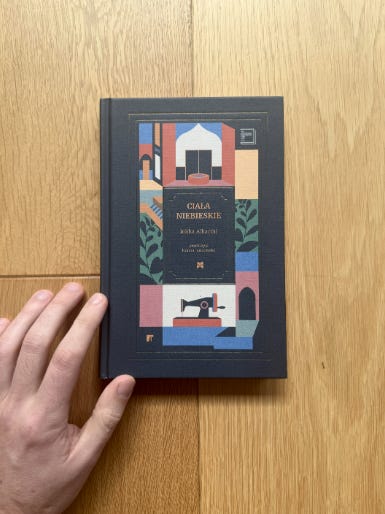
It is a multi-voiced narrative centered around three sisters from the village of al-Awafi, but it quickly expands to include husbands, relatives, and entire networks of relationships. The story moves non-linearly, shifting constantly between past and present.
Each character exists within their own orbit, occasionally intersecting with others, like the celestial bodies of the title.
If there is a protagonist here, it is not a person.
It is Oman itself.
A country in transition
Through fragmented perspectives, Alharthi shows a society in transformation.
From a world of tradition, patriarchy, arranged marriages, and rigid hierarchy, to one shaped by education, mobility, and modernization.
This transformation is not presented through historical summaries, but through conversations, family dynamics, marriages, and everyday life.
Oman is not an exotic destination here. It is a real place, full of tensions: social, gendered, historical. Modernity does not erase the past. It coexists with it.
And often, it struggles against it.
The legacy of slavery
One of the central themes of the novel is the legacy of slavery.
Slavery in Oman was officially abolished only in 1970.
That is not a distant historical fact. It is recent. Just over half a century ago.
At a time when humans had already landed on the Moon, when the Vietnam War was ongoing, and when cultural revolutions were reshaping the West, slavery still existed in Oman.
Alharthi explores this legacy through relationships between former slaves and their former masters, as well as through the experiences of the first generation born into freedom.
These relationships are complex. Not easily categorized. Not reducible to simple narratives.
A long and difficult history
Oman’s connection to slavery stretches back centuries.
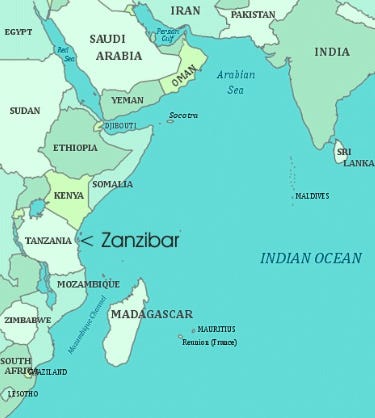
Due to its geographic position, it became one of the centers of the Arab slave trade across the Indian Ocean. Enslaved people, often brought from Africa, were used in agriculture, domestic work, and craftsmanship.
Some argue that slavery in the Arab world differed from the Atlantic system, with more frequent integration and emancipation.
But this does not change the fundamental reality of coercion and exploitation.
During periods of Portuguese, Persian, and Ottoman influence, and later under British pressure, attempts were made to limit the slave trade. Yet the institution remained deeply embedded in society.
Even after World War II, international pressure intensified. The United Nations formally classified slavery as a crime against humanity and estimated that around two million enslaved people still lived in the Arabian Peninsula.
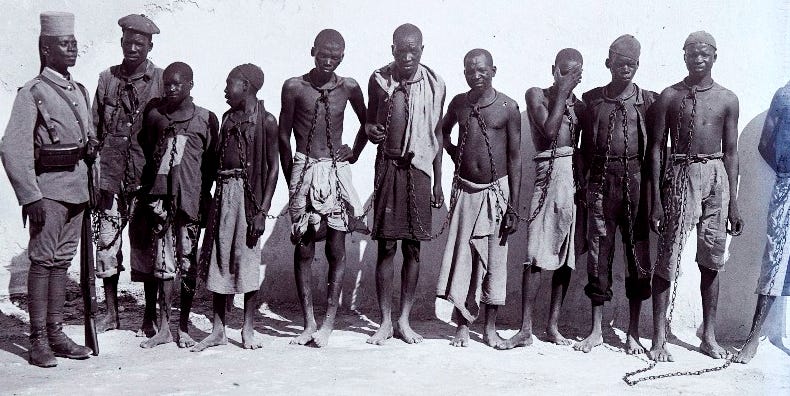
A UN committee investigated the issue in the 1950s and concluded that Oman was violating international law. Britain, despite its official stance against slavery, was criticized for supporting the Sultan while turning a blind eye to the practice.
A British reporter visiting Oman in 1956 observed that some members of the Sultan’s household staff were not free and could not leave their positions.
Only in the late 1960s did reforms begin to take effect, culminating in the abolition of slavery in 1970.
The present
This means that there are still people alive today in Oman who were born into slavery.
And while formal slavery has ended, forms of modern exploitation persist.
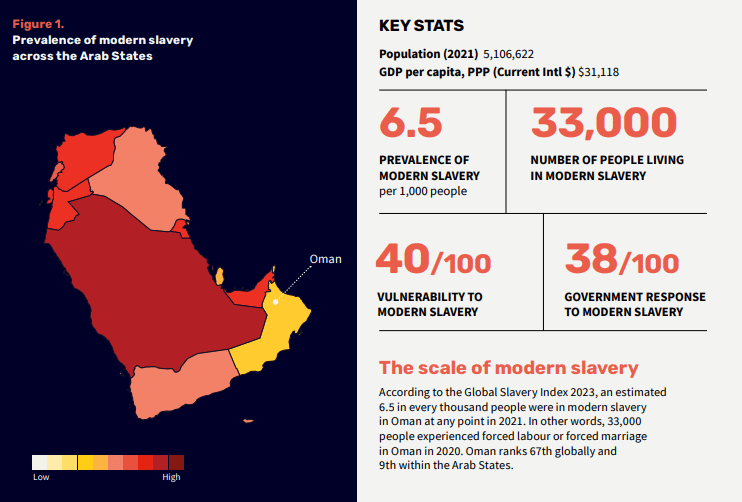
According to the Global Slavery Index (2023), more than 6 in every 1,000 people in Oman can be considered victims of modern slavery. That translates to over 30,000 individuals.
Today, this often involves migrant workers brought from Africa or Asia, who, due to legal and financial constraints, may find themselves unable to leave their jobs or return home.
Why this book matters
Celestial Bodies is not only a novel.
It is a quiet, complex record of a society negotiating its past and present. A country that, for decades, remained relatively isolated, now undergoing rapid change.
But change is not linear.
It is uneven. Partial. Marked by what came before.
My rating - 7/10
Further reading
The Guardian photo report
https://www.theguardian.com/global-development/gallery/2023/jul/24/i-shook-with-fear-the-indian-women-who-escaped-slavery-in-oman-in-picturesGlobal Slavery Index report
https://cdn.walkfree.org/content/uploads/2023/09/28143104/GSI-Snapshot-Oman.pdf
* Translated from Polish using AI.