
#Project195 - MALAYSIA
The Murder of a Lover That Shook the British Colonies

When reading one book from every country in the world, I sometimes struggle to choose the right one. The reasons vary. Sometimes the list of books from a given country is simply too long to make a decision. At other times, I am in the mood for something lighter, even though I know I should probably reach for a national epic. And sometimes I face dilemmas that I could even describe as moral.
That was exactly the kind of problem I encountered with Malaysia.
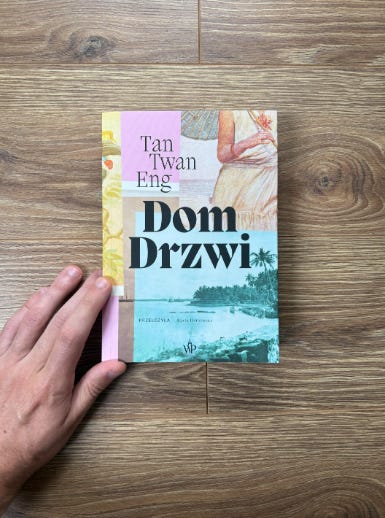
At first glance, the choice seemed obvious. Every search engine and online forum appeared to be shouting the same recommendation at me: The House of Doors.
This is, of course, the celebrated 2023 novel by Tan Twan Eng. Born in Penang, one of the states in northwestern Malaysia, Eng first gained international recognition with his 2012 novel The Garden of Evening Mists, which won numerous awards and was shortlisted for the Booker Prize.

The House of Doors was also longlisted for the 2023 Booker Prize and appeared on many lists of the best books of the year.
So why my hesitation?
In Project195, my primary goal is to showcase a part of the national history, culture, and literature that a given book represents. The House of Doors tells a beautiful story, but it is ultimately a story of Malaysia during the colonial period, when the country was governed by the British.
In the end, I decided that colonialism is an inseparable part of Malaysian history. For centuries, the Malay Peninsula has been a meeting place of many cultures—including European ones. And although I do not yet have enough points of comparison, it seems that I could hardly have chosen a better book.
Colonial Malaysia Through Fiction
In many ways, The House of Doors is a literary novel set against the historical backdrop of early twentieth-century colonial Malaysia.
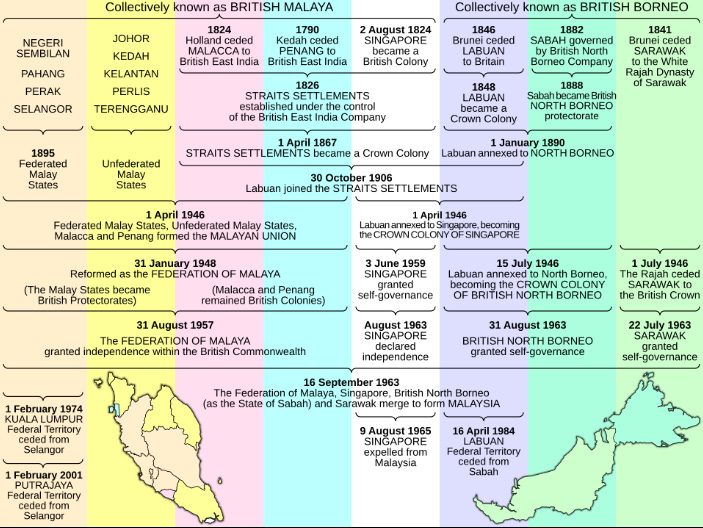
The 1920s were a period when Penang, as part of the Straits Settlements, belonged to the British Crown. The history of this part of Asia would require several textbooks to explain properly, so I will spare you the lengthy overview. For a taste of the period, you may want to explore the history of British rule on the peninsula.
The story begins with a visit by the British writer, former spy, and closeted homosexual Somerset Maugham - who was very much a real person - to the fictional British couple at the center of the novel: Lesley, the protagonist, and her husband Robert Hamlyn.
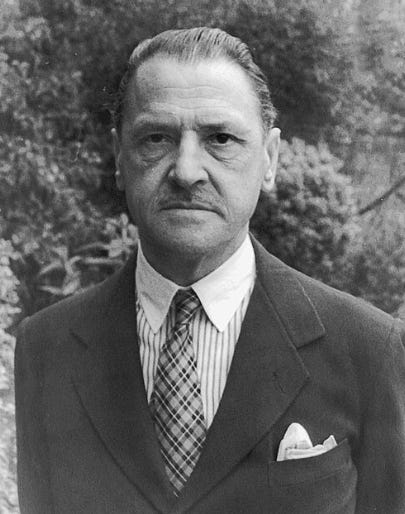
Somerset Mougham by Carl Van Vechten (1934)
Their relationship opens the door to a series of hidden stories involving other figures living in Penang during that era. Among them is Sun Yat-sen, the first provisional president of the Republic of China, who at the time was building a revolutionary movement in Malaysia aimed at overthrowing the Chinese Empire. Another is Ethel Proudlock.
It was her story that struck me as the most extraordinary part of the novel.
Why?
The Real Ethel Proudlock
Ethel Proudlock was also a real person, whose life Eng reimagines in fictionalized form.
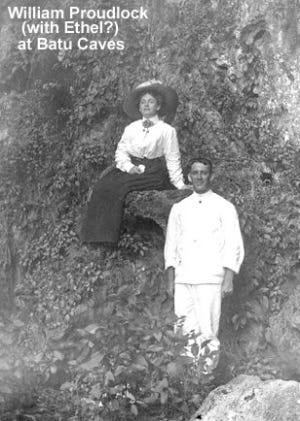
If you had picked up virtually any British newspaper in 1911, you would probably have found it impossible to avoid her story.
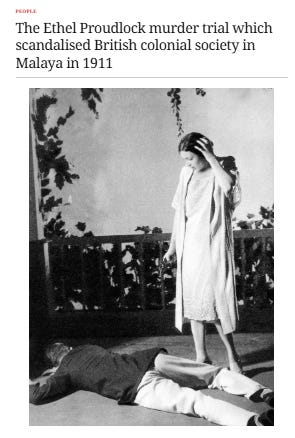
That year, Ethel shot and killed William Crozier Steward, an engineer employed by a local Singaporean company. At the time, she was married to William Proudlock, the headmaster of one of the most prestigious boys’ schools on the peninsula.
She belonged to local high society. While not a member of the wealthiest or most famous colonial families, her social standing was undeniably significant.
The killing of Steward became one of the most shocking and widely discussed criminal cases of the era.
There were several reasons for that.
A Suspicious Visit
First, the murder took place while Ethel was alone at home.
In court, she claimed that although she knew Steward, she had not expected his visit. Once she had allowed him inside, he allegedly attacked her and attempted to rape her. According to her testimony, she fired her revolver in self-defense.
Yet the very fact that Steward had visited her in the absence of her husband was considered highly suspicious. Rumors of an affair quickly spread.
Contradictions in Her Story
Second, the defendant’s version of events contained numerous inconsistencies.
The first two shots were fired on the veranda of the house. However, Proudlock then followed the wounded Steward into the garden, where she emptied the remainder of her revolver into his body, striking him several times in the back and head.
During the trial, it emerged that Ethel had purchased the revolver only days earlier and had practiced shooting with it on several occasions.
To many observers, the coincidence seemed deeply incriminating.
A Battle Over Her State of Mind
Third, both the defense and the prosecution focused heavily on Proudlock’s psychological condition.
The defense argued that she had been in shock, could not remember parts of the incident, and sought to portray her as a helpless, fragile woman overwhelmed by circumstances.
The prosecution, meanwhile, repeatedly introduced evidence suggesting remarkable composure during the killing. As mentioned earlier, prosecutors even implied that the murder may have been carefully planned in advance.
A Threat to the Colonial Order
Finally, and perhaps most importantly, there was Proudlock’s social status.
For decades, the colonial system had been built upon the idea that Britons were people of superior moral standards—individuals who governed and protected colonial societies from populations supposedly prone to emotion and incapable of controlling their temperaments.
Ethel belonged to the colonial elite. She was a woman. And she had shot another white member of her own social circle.
When these four factors are combined and then paired with the verdict - a death sentence handed down by a colonial court - the result becomes an explosive mixture of scandal, politics, and social upheaval.
Why the Case Matters
You can discover how Ethel Proudlock’s story ultimately ended through Wikipedia, numerous historical articles, or by reading Eng’s novel itself.
The author took this remarkable case and wove it into his narrative as one of several fascinating storylines, creating a vivid portrait of Malaysia during the colonial era.
And although Ethel’s story is not the book’s central plotline, it remains one of its many strengths.
There are many more.
My Rating - 8/10
Further Reading
Ethel Proudlock Case (Wikipedia): https://en.wikipedia.org/wiki/Ethel_Proudlock_case
National Archives of Singapore – Ethel Proudlock Records: https://www.nas.gov.sg/archivesonline/private_records/record-details/a7b817b9-3fdd-11e5-b55d-0050568939ad
Historical Overview of the Case (YouTube):
* Translated from Polish using AI