
#Project195 - FINLAND
The Author Whose Book an Entire Nation Read

From early childhood, I was fascinated by war - or rather by its cultural image, shaped largely through gargantuan Hollywood productions. Especially those that tried to show the “true face” of conflict as seen through the eyes of an ordinary soldier.
My mind could not reconcile itself with the randomness of death, with the absurdity of people fighting one another while longing only to return home. A teenager’s imagination could not grasp the senselessness of the battlefield, or lives thrown onto the scales by men barely older than I was then - men driven forward by their officers, forced at last to raise their heads above filthy trenches where a roll of the dice determined whether a bullet would strike them between the eyes or merely graze a miserable helmet.
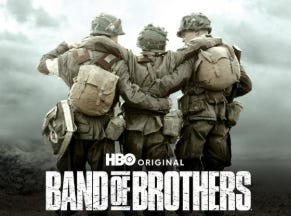
I grew up absorbed by popular films such as Saving Private Ryan, Platoon, Full Metal Jacket, and television series like Band of Brothers or The Pacific. I am fully aware that these productions generated tens of millions in revenue for their creators partly because my fascination was never unique.
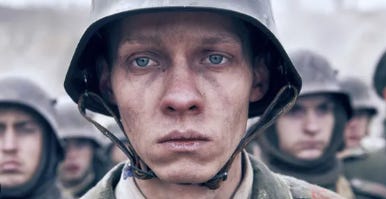
In many people there must exist a certain internal conflict between a cold fascination with war and a deep revulsion toward it - an uneasy tension that gives rise to precisely these kinds of films. Yet in Hollywood productions I often missed one crucial perspective: the point of view of someone from a country other than the United States. America, after all, largely “won” two world wars and continues to monetize those victories to this day. It even monetizes its defeats, such as Vietnam.
But how do other nations see war?
Literature helps answer that question. Of course, not exclusively - one cannot pretend that films are made only on America’s west coast. Still, literature is almost always the seed from which stories later retold in countless forms across popular culture begin to grow.
Why am I writing all this?
Because as part of my Project 195 - in which I read one book from every country in the world - I came across a true diamond: Unknown Soldiers by the Finnish author Väinö Linna.
Väinö Linna: From Poverty to the Front Lines
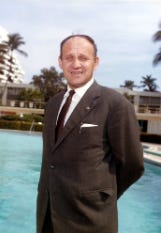
Linna was born in the sparsely populated region of Urjala in southern Finland just days before Christmas Eve in 1920. One of seven siblings, he was forced at the age of seven to confront his father’s death and the beginning of a hard life marked by poverty and struggle. Raised by a single mother, he abandoned formal education after only six years to help support the family by working in logging.
In search of better wages, he left his hometown - like much of Finland’s young generation at the time - and moved to a larger city. There he found work in the textile industry, though the job had little to do with his greatest passion: literature.
Linna later recalled that from the moment he learned to read, he devoured adventure novels borrowed from the local public library. Paradoxically, it was the greatest conflict of the twentieth century that ultimately allowed him to turn that passion into lived experience.
War as Lived Experience
In 1940, Linna - like many men of his generation - was conscripted into the army to take part in the second war against the Soviets, today seen as one of the many armed conflicts subsumed under the broad label of the Second World War.
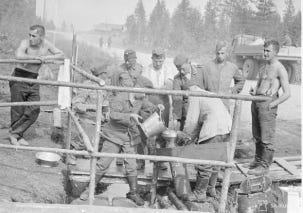
He did not merely fight at the front; he commanded a unit and bore responsibility for his fellow soldiers. He witnessed firsthand trench warfare, the deaths of friends, and the daily existence of an infantryman. Under relentless fire, in subarctic cold, often hungry and always exhausted, he began to record his observations in a private diary.
After the war ended and he returned home, he was unable to publish these memories. In a surge of artistic despair - or perhaps simple human resignation - he decided to burn all of his notes.
What remained, however, in his memory eventually took the form of a novel.
Unknown Soldiers (Tuntematon sotilas)
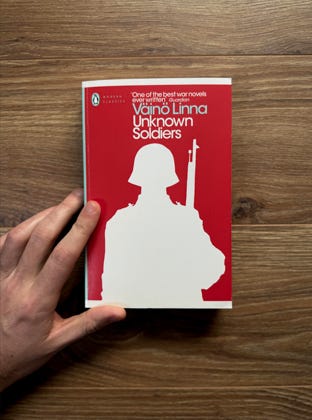
Published in 1954, Unknown Soldiers initially received mixed reactions from literary critics. For the first time in Finland, a voice emerged that cried out about the senselessness and absurdity of war - a voice speaking not for national heroes cast in bronze, but for soldiers of flesh and blood. Naturally, this clashed with the efforts of political and cultural elites to construct a unified historical memory glorifying national wartime sacrifice.
Fortunately, critics do not decide the fate of novels - readers do.
And the Finns decided unanimously.
Within just six months of publication, over 175,000 copies were sold in a country of roughly four million people.
War Without Glory
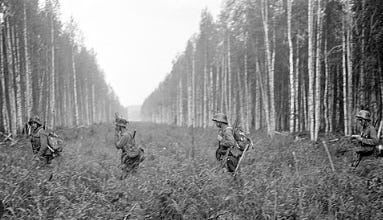
Unknown Soldiers tells the story of an infantry unit fighting in the so-called Continuation War against the Soviet Union between 1941 and 1944, when Finland formally fought alongside Nazi Germany. Drawing on memories that could not be burned along with his wartime notes, Linna wove a brutally realistic portrait of war as seen through the eyes of ordinary people - people like himself.
Linna achieved what Hollywood still often strives to do. He showed the absurdity of war, brotherhood, fear, and a deeply pacifist protest against the senselessness of thousands of anonymous deaths on both sides. You will not find pages glorifying heroic bravery - except for a few instances, which the author presents more as incomprehensible madness bordering on the absurd. Far more common are depictions of cowardice, cunning, and instinctive self-preservation - of humanity.
Language, Identity, and Literary Genius
What is particularly striking from a purely literary perspective is Linna’s refusal to smooth out dialects and regional speech in his dialogue. Each character speaks differently. Despite sharing the same battlefield and daily reality, the soldiers differ in origin, language, experiences, beliefs, and even in their visions of life after the war.
They are human in every sense of the word - thanks to Linna’s literary genius.
A National Classic
Unknown Soldiers has been translated into more than twenty languages, sold over 800,000 copies worldwide, inspired four film adaptations, and spawned numerous stage productions. To this day, it remains a vital element of Finnish national identity - a story of a shared, often painful and ambiguous history, encompassing not only heroes and victims, but also perpetrators.
Unknown Soldiers is an integral part of Finnish culture.
I could not have chosen a better book from this country.
My rating: 9/10
Other works by Väinö Linna: Under the North Star (1959)
* The text was translated from Polish using AI.