
#Project195 - CONGO
A Drunk Hero or a Drunk Country?

Project195 keeps taking me to places that feel increasingly distant and unfamiliar. Often, these are countries I will probably never visit in person. That is precisely why literature matters here more than anywhere else. I am far more interested in how a country looks through the eyes of its own writers than through the lenses of Instagram travelers hunting for cheap sensations.
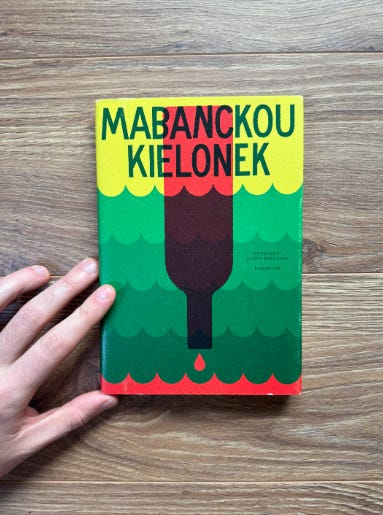
This time, the literary journey led me to Congo. Since the name itself can be misleading, it is worth clarifying that this is the Republic of the Congo, located on the western coast of Africa, formerly known as French Congo and, after gaining independence in 1960, as Congo Brazzaville.
Beyond vague associations with regional conflicts and its proximity to former Zaire, my knowledge of the country was limited. That made Alain Mabanckou’s novel Broken Glass (Verre Cassé), already translated into many languages, all the more intriguing.
Alain Mabanckou. A Congolese Voice in the World
Alain Mabanckou was born in the Republic of the Congo in 1966. According to his biography, by the age of six he already spoke several African languages and later added French. He studied literature and philosophy at the local Karl Marx University, a telling detail in a country that effectively belonged to the Eastern Bloc until the early 1990s.
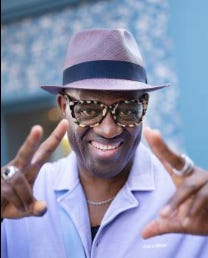
Thanks to a scholarship, he continued his education in France, leaving Congo at the age of twenty two. He debuted in the late 1990s with Bleu Blanc Rouge, which earned him his first literary award. More than twenty years ago, he moved from France to the United States, where since 2002 he has lived and worked at the University of Michigan.
A Window into Congolese Society
I read Broken Glass in Polish translation and like many books in this project, it became a window into a society I knew almost nothing about.
This is, without a doubt, a novel about social and deeply personal problems faced by Congolese people.
The book is simultaneously a farce, a political satire and a playful homage to world literature, which Mabanckou constantly references. Yet beneath its bravado and originality, written as a nearly uninterrupted stream of sentences with minimal punctuation, emerges a bleak story of alcoholism and human decline.
Broken Glass. The Man and the Microcosm
The title character, Broken Glass, is both the protagonist and narrator. Most of the story unfolds in a local bar he frequents and in the area around his home. A former teacher, a self appointed urban chronicler and above all an alcoholic, Broken Glass embodies social collapse.
On the most immediate level, the novel tells the story of an individual downfall. An outsider rejected by family and community, seeking understanding among bar regulars and at the bottom of yet another glass.
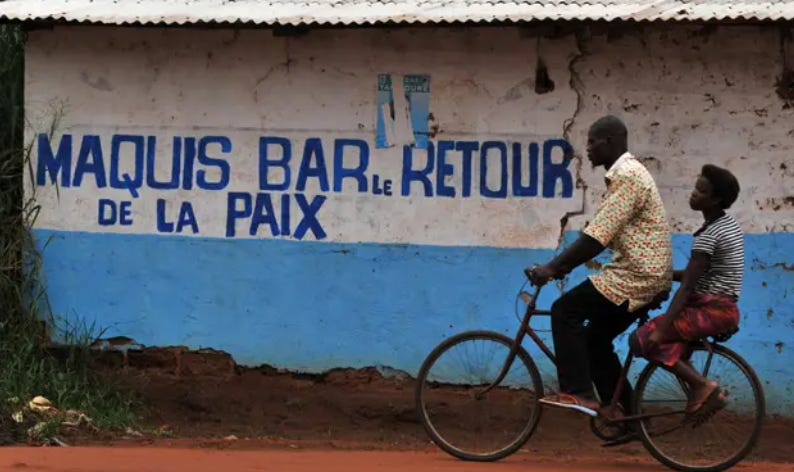
The bar itself functions as a microcosm of Congo, and more broadly of postcolonial sub Saharan Africa. Alcohol becomes both an escape from the absurdity of reality and a filter through which the protagonist is able to speak the truth and name things as they are.
Satire Without Illusions
The novel’s second layer is a sharp social diagnosis delivered through irony and grotesque humor.
There is no nostalgia here.
No sentimental attachment to the homeland.
Instead of exoticism, the reader encounters dirt, laughter, disappointment and disillusionment.
Mabanckou mercilessly exposes Congolese society. Authoritarian regimes. Political absurdity. The hypocrisy of local elites. He looks at his country through the eyes of a defeated man who has no illusions left and therefore no reason to lie.
Language, Form and Drunken Rhythm
The third layer of the novel lies in its language and form. The absence of periods and conventional punctuation unleashes a stream of consciousness that perfectly mirrors the rhythm of drunken speech, intoxication and mental chaos. Past memories and present judgments blur together.
At the same time, the book is densely packed with references to world literature. Magical realism in the spirit of García Márquez, Zola’s naturalism and Beckett’s existentialism collide with descriptions of Congolese slums filled with prostitution, mud and decay.
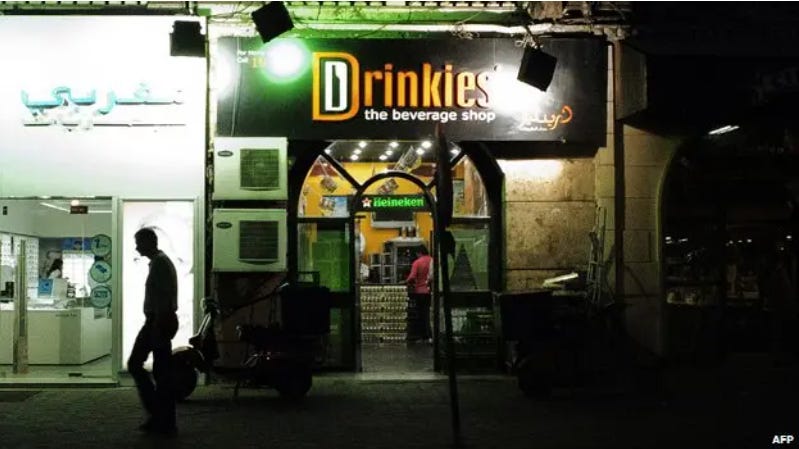
The contrast is startling.
And deeply effective.
Alcohol as a Silent Protagonist
Beneath these three layers lies something else.
A warning.
Choosing an absurd, humorous alcoholic as the narrator is, of course, a literary device. But it also points to a real and growing problem in sub Saharan Africa. Alcoholism.
One might argue that compared to poverty, corruption, exploitation of national resources, dependence on global powers, pandemics, child mortality, lack of clean water, HIV, domestic violence, wars and ethnic cleansing, alcohol abuse seems almost trivial.
At first glance, statistics appear to support this view. Alcohol ranks only around fiftieth among direct causes of death in Congo, behind drowning, skin diseases and suicide.
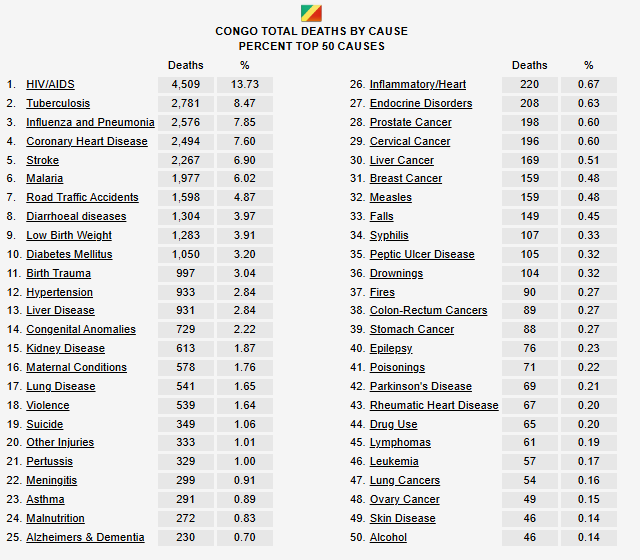
But dismissing it would be a mistake.
According to WHO, Statista and reports cited by Business Insider, excessive alcohol consumption has become a regular and growing issue in Congo. Alongside Equatorial Guinea, the country has recently ranked among the highest globally for binge drinking, defined as consuming more than 1.5 liters of alcohol in a single occasion within a thirty day period.
In 2024, nearly 44 percent of surveyed Congolese reported episodic heavy drinking.
The problem is not only the quantity.
It is the pattern.
Binge drinking has become a normalized part of celebrations, social gatherings and everyday life.
Given the young demographic structure of African countries, including Congo, this trend is likely to intensify. It will affect education, cognitive development, violence levels and a range of social pathologies closely linked to alcohol abuse.
WHO data further shows that while a smaller proportion of Africans drink alcohol compared to Western Europe, often for religious or cultural reasons, those who do drink tend to consume far larger quantities.
The Invisible Main Character
This is the tension that permeates nearly every page of Broken Glass.
Alcohol is not merely a literary tool.
It is an invisible and silent protagonist.
Without it, we would not hear Broken Glass’s voice.
Without it, Broken Glass would not exist.
The lingering question remains.
Would he have stayed a respected teacher and a pillar of society without alcohol?
Or would we still find him standing on a street corner, depressed, defeated and silent?
My rating: 6.5/10
Sources
World Health Organization – Alcohol
https://www.afro.who.int/health-topics/alcoholBBC – Alcohol and Africa
https://www.bbc.com/news/magazine-24083170World Life Expectancy – Congo
https://www.worldlifeexpectancy.com/country-health-profile/congoBusiness Insider Africa – Heavy Drinking
https://africa.businessinsider.com/local/lifestyle/african-countries-on-global-list-of-heaviest-drinkers/ff4wmk6
* Translated from Polish wih AI.